Window Light or a Soft Lamp for a Quiet Evening?
Window light or a soft lamp can make a reading corner feel calmer; learn how to choose by comfort, changing daylight, room layout and mood.
The common mistake in choosing window light or a soft lamp for a quiet evening is treating one as the obvious winner. That can leave a reading corner pleasant in theory but uncomfortable in practice: daylight fades, a lamp casts glare, or the seat feels exposed when you wanted a little privacy.
A better choice starts with the feeling you want from the corner and the conditions around it. Window light offers a connection to the outdoors and changes as evening approaches. A warm lamp creates a more contained pool of light. Neither has to define the room alone; the useful question is which one makes it easier to settle into a book without fuss.
What feels different about window light and a soft lamp?
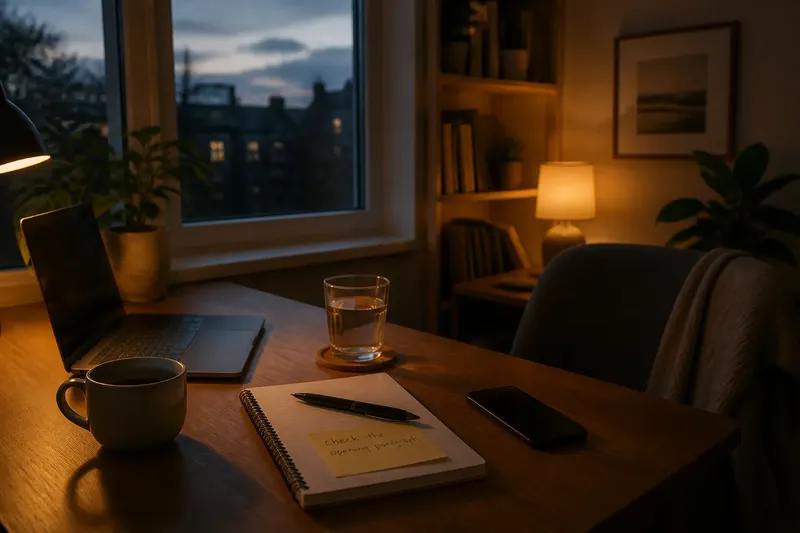
Light from a window has a spacious quality. It reaches the room from beyond its walls, and small changes outside—the sky dimming, branches moving, a neighbor’s porch light appearing—give the corner a sense of time passing. That can feel companionable, especially if you like to read while glancing up now and then.
A lamp makes the experience more inward. A shaded table lamp can gather attention around a book and a chair while leaving other parts of the room subdued. Instead of following the evening outside, you can let the room become a small, consistent refuge.
The contrast is not simply natural versus artificial light. A window may feel soothing or distracting depending on what is beyond it, while a lamp may feel cozy or constricting depending on where it sits. Notice which kind of attention you want: open to the room and outdoors, or gathered close to the page.
Is a window a comfortable place to read after sunset?
It can be, provided the light is still adequate for the page and the seat feels comfortable. In the earlier part of the evening, a window may provide enough soft light to read without turning on a lamp. As daylight weakens, though, the page can become harder to see. Squinting or shifting closer to the glass is a cue that the corner needs more light, not a reason to push through.
The window’s surroundings matter, too. A view of trees or a quiet courtyard might offer gentle visual company. A bright street, a television across the way, or movement that keeps catching your eye may pull you out of the book. If privacy is a concern, curtains or a shade can change how exposed the corner feels, though closing them also changes the connection to the outdoors.
Consider the temperature and drafts near the glass. A chair can look inviting and still feel chilly against a window, particularly when the weather changes. A throw, a cushion, or a small adjustment in the chair’s position may help; if the seat remains uncomfortable, the view is not enough to make it a good reading spot.
When does a lamp make a better reading corner?
A lamp is useful when you want light that does not depend on the weather or the time of sunset. It can make the corner available on a gray afternoon as well as a dark evening, and it gives you more control over where the brightest area falls. A shade helps soften the bulb’s direct brightness, while a lamp with an adjustable arm can direct light toward the book.
Placement matters more than having an elaborate fixture. Put the light where it reaches the page without shining straight into your eyes. Check the angle from your usual sitting position, not only from across the room. If the shade itself is what you notice, or the page has a sharp patch of brightness, try turning the lamp or moving it slightly before deciding the bulb is the problem.
Warm-colored light often feels less stark in a restful corner than a cool, bright beam, but comfort is personal. Some readers prefer a clearer, more neutral light to distinguish print, while others enjoy a softer glow. Follow the lamp and bulb maker’s instructions, and choose a setup that lets you read comfortably rather than one that looks right in a photograph.
How should you choose between window light and a soft lamp?
Begin with the part of the evening when you most often read. If you usually sit down while daylight remains, the window may already offer the atmosphere you want. If reading tends to happen after the room has grown dim, a lamp may be the more dependable center of the corner. When both situations are common, you can arrange the seat so either source is useful.
Then look at the room from the chair. Ask whether the window draws your attention in a way you enjoy, whether the lamp would create glare, and whether you can reach a switch without disrupting the moment. Think about the book, too: fine print may call for clearer light than a familiar paperback you read in brief stretches.
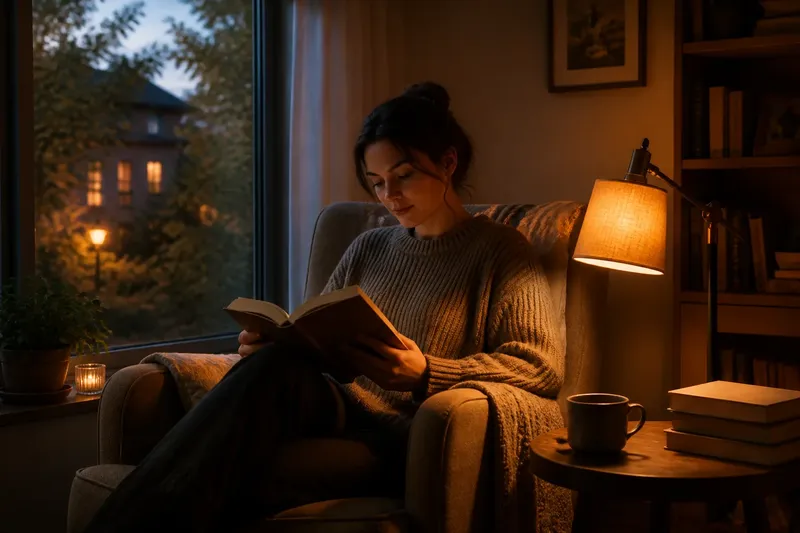
Say you have a chair beside a window overlooking a leafy courtyard, but you usually read after the sky begins to darken. You might keep the chair facing the view and set a shaded lamp beside it, angled toward the page. The expected result is that the corner keeps its outdoor character earlier in the evening and remains usable once the natural light fades, without asking you to choose only one mood.
If you would rather keep the corner simple, decide which compromise matters less. A window-first arrangement may offer more visual openness but depend on the changing light. A lamp-first arrangement may feel more sheltered but reduce the view’s role. The better option is the one whose trade-off you are willing to live with on an ordinary evening.
What should you do when both kinds of light feel distracting?
Start by identifying what is bothering you. A bright reflection on a screen, a visible bulb, a moving view, and dim print are different problems. Turning on more lights may help with one and make another worse, so change one feature at a time.
If the window is pulling your gaze away from the book, try facing the chair at an angle rather than directly toward the glass. A sheer curtain can soften a view without shutting it out. If the lamp is distracting, check whether the shade blocks the bulb from your line of sight and whether the light falls across the page rather than into your eyes.
Also notice what happens when you stop reading. A corner intended for quiet may feel better with a small side table for a mug or book, but clutter can make the space feel busy. Keep only what supports the way you actually use the seat. The aim is not to decorate a perfect retreat; it is to reduce the small irritations that make you leave it.
Which light is easier on the eyes while reading?
Should I read by a window if the page looks dim?
No. If the page is difficult to see, add suitable light or move to a brighter spot rather than forcing your eyes to work harder. Choose the arrangement that lets you read without squinting.
Is warm lamp light always more comfortable?
No. A warm tone can feel gentle, but a lamp that is too dim or poorly aimed can still make reading uncomfortable. Let the clarity of the page and the absence of glare guide your choice.
Can window light cause glare on a book or screen?
It can, depending on the window’s direction and how you sit. Turn the page or screen slightly, shift the chair, or soften the incoming light with a curtain.
Should I use a window and a lamp together?
Yes, if the combination feels comfortable and the two sources do not compete. The window can shape the mood while the lamp supplies enough light for the page as evening settles.
How can you make the corner feel quiet without overthinking it?
Choose one comfortable seat, a place to set down your book, and a light source that suits the time you use the corner. A floor lamp can be useful when a side table is scarce; a compact table lamp may work better beside a chair with an arm. If the window is the pleasure of the space, arrange the seat to keep the view in reach without putting the brightest part of the sky in your direct line of sight.
Try the arrangement during an ordinary reading session, not only while tidying the room. Notice whether you keep adjusting the shade, moving your head to avoid glare, or abandoning the chair as the light changes. Those small observations are more useful than choosing a lamp or seat based on how it appears from the doorway.
Window light or a soft lamp is not a test of how a reading corner ought to look. It is a choice about the kind of quiet you want nearby: open to the changing evening, gathered around the page, or somewhere between the two. Once the light lets you read comfortably, leave room for the rest of the ritual to stay uncomplicated—a book within reach and permission to sit for as long as it feels good.