How to Make an Afternoon Stroll Feel Like Leisure
An afternoon stroll can feel like leisure, not another task. Choose a comfortable route, leave room to pause, and return with a clearer sense of the day.
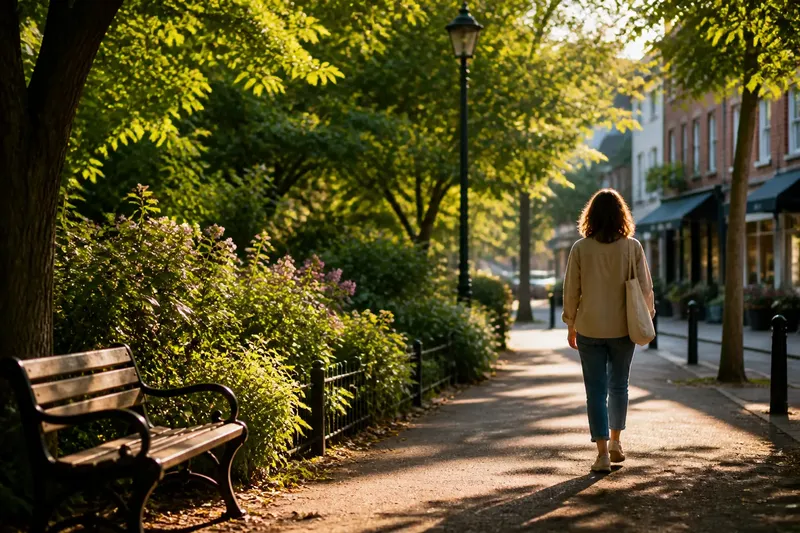
The common mistake with an afternoon stroll is treating it as exercise that failed to become a workout. That judgment costs the outing its simplest pleasure: time spent moving through a place without needing to prove anything. An afternoon stroll can instead offer a change of scene, a chance to notice your neighborhood, or an easy stretch of company.
It helps to think about the particular place and purpose of the outing, rather than making it a daily ritual to maintain. A walk through a shaded park feels different from a loop past busy storefronts; walking alone differs from walking beside a friend. Those choices shape the experience more than a rule about how often you go.
What makes an afternoon stroll feel like leisure?
A practical walk is organized around arrival: getting to the bus stop, carrying home groceries, or reaching an appointment. A stroll may still have a destination, but arriving is not its only purpose. The route itself gets some attention.
Speed does not settle the question. A brisk pace can leave room to enjoy the street, while a slow one can feel tedious if you are focused only on getting home. Ask instead whether the outing gives you something you want from this part of the day: a little quiet, a conversation, or a reason to look beyond the walls around you.
That purpose can guide small decisions. A loop around a public garden suits someone who wants greenery and a clear way back. A walk along a lively main street may suit someone who enjoys browsing shop windows and watching the neighborhood move.
How do you choose a route for an afternoon stroll?
Start with the place you can reach without making the outing a project. A nearby park, a shaded residential street, a public square, or a familiar block may be enough. Look for a route that feels comfortable for your needs and has an easy point to turn back or shorten the walk.
Choose a route for what it offers, not for how much ground it covers. Trees, gardens, a bench, storefronts, or a quiet side street can give your attention somewhere to rest. If a destination helps you get started, choose one that allows you to pause rather than creating pressure to arrive quickly.
Weather, traffic, lighting, and accessibility all affect whether a route suits the day. Adapt to local conditions and your own mobility or health needs. If you need personal health guidance, consult a qualified professional.
What small choices make the walk more enjoyable?
Wear shoes and clothing that suit the route and conditions. Take your phone if you need directions or want to stay reachable; leaving it at home is not a requirement. If you listen to music or a podcast, choose what makes the outing pleasant for you. Walking without audio can also leave more room to hear birds, traffic, or a familiar shop opening its door.
Give the outing a loose purpose before you leave. You might want a quiet pause after lunch, a chance to talk with a friend, or a look at the changing front gardens on your block. A purpose can guide your attention without turning the walk into an exercise in concentration.
Say you have a short open stretch after lunch and want a break from a screen. You choose an out-and-back route past a small park and a corner store, take your phone for directions, and leave your headphones at home. If the park is crowded, you continue along the quieter side street; the expected result is a pleasant change of scene, even though the original route changed.
What should you consider before heading out?
Use these checks to make a route fit the outing you want. Each observation points to a choice, with another option if the first one does not suit the day.
- Check whether the route has a comfortable surface for your footwear; if it does, take that route, and if not, choose a smoother nearby street or path.
- Check whether the weather feels manageable in your clothing; if it does, head outside, and if not, choose a covered public passage or stay in.
- Check whether you have enough time to enjoy the route without rushing; if you do, take the full loop, and if not, use a shorter out-and-back route.
- Check whether you want quiet or conversation; if quiet sounds welcome, walk alone, and if company sounds better, invite someone or arrange a call before leaving.
- Check whether you want to notice your surroundings or listen to audio; if you want to hear the street, leave headphones out, and if audio would make the walk more pleasant, choose a familiar recording and keep aware of nearby activity.
- Check whether you need navigation or to remain reachable; if you do, carry your phone, and if you do not, keep it in your pocket or leave it behind if that feels appropriate.
What questions help you plan an afternoon stroll?
Does an afternoon stroll need a destination?
No. A loop, an out-and-back route, or a wander through a nearby park can be enough. A destination may offer a reason to begin, but the route can be part of the point.
Is a stroll different from a fitness walk?
The difference is mainly in what you are asking of the outing. A fitness walk may focus on exercise, while a stroll can center on a change of scene, a pause, or company; the pace alone does not define it.
What can you do if the weather is unpleasant?
Check local conditions and choose what feels comfortable. A covered public passage or a shorter route may work, and staying in is also a reasonable choice if going out does not suit the day.
Should you walk alone or with a companion?
Either can work. Choose solitude if you want a quiet interval, or invite a friend if conversation would make the walk more enjoyable.
How can you make the outing fit the day?
Let the route and company respond to what is actually available. On a busy afternoon, a brief loop near home may be more enjoyable than trying to fit in a longer outing. If you are meeting someone, agree on a nearby starting point and a route that leaves room to turn back when either of you is ready.
Imagine you planned to walk through a public garden, but rain begins before you leave. Your starting point is a free hour after lunch and a desire to see something beyond your desk. You check that a covered arcade nearby is open to the public, take a light jacket and your phone, then walk there and pause to look at the shop windows. If the arcade feels crowded, you turn back along a quieter block; the resulting outing is shorter and less green than planned, but it still gives you a change of scene without pushing through uncomfortable weather.
An afternoon stroll is most useful when it answers a real preference, rather than a demand to keep a routine intact. For an afternoon stroll that feels like leisure, choose one appealing feature of the route—a bench, a tree-lined block, or a familiar storefront—and let that be enough reason to go.